

Yellow-Legged Hornets Are in North Carolina: What Charlotte Backyards Need to Know
One Hornet in Matthews
and why the internet got it wrong
North Carolina’s first confirmed yellow-legged hornet turned up at a hummingbird feeder in Union County. Almost every photo you’ve seen since is a different insect entirely.
One confirmed detection, a handful of adults near the Union–Mecklenburg line, and 200+ survey traps already in the ground. Attention, not alarm — and a very good reason to learn the difference between a real yellow-legged hornet and the three natives taking the blame for it.
Almost every “yellow-legged hornet” photo going around Charlotte right now is something else. A European hornet, usually. Sometimes a cicada killer, sometimes a bald-faced hornet — all native, all here every summer, all harmless to you.
The actual yellow-legged hornet has been confirmed in North Carolina exactly once. Here is what happened, how to tell the real thing from its lookalikes, and what it means for the bees in your backyard.
What actually happened in Matthews?
On July 27, 2026, the North Carolina Department of Agriculture and Consumer Services (NCDA&CS) confirmed the state’s first-ever detection of the yellow-legged hornet. It happened in Matthews, in Union County. A homeowner noticed unusual activity around a hummingbird feeder and reported it — which is exactly how these things get caught.
A few more adults have since turned up near the Union and Mecklenburg county line. NCDA&CS and the USDA’s plant-protection division have set more than 200 survey traps in the area to find and destroy any nests. That is the whole confirmed footprint. One site, a handful of insects, a fast response.
What is a yellow-legged hornet?
The yellow-legged hornet (Vespa velutina) is an invasive predator native to Southeast Asia. Its first appearance in the United States was near Savannah, Georgia, in 2023. It is not the “murder hornet” that made headlines out west a few years ago — that was a different species entirely.
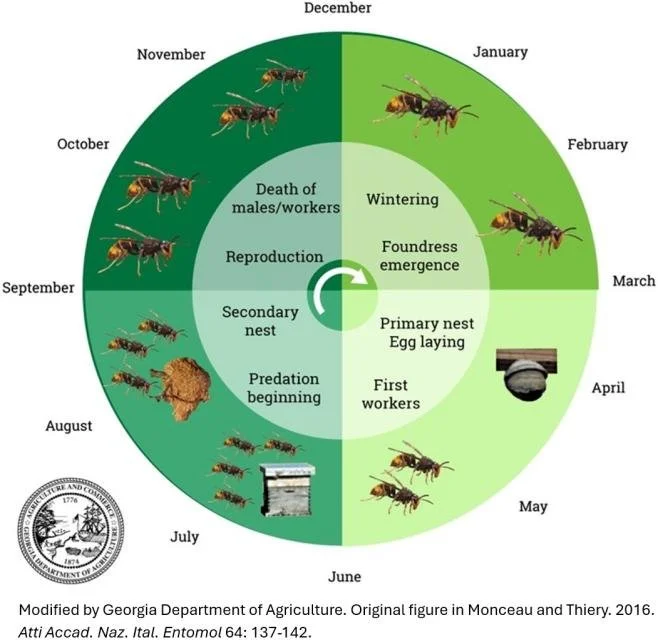
What makes this one a concern is simple: it hunts honey bees. The hornets practice something called “hawking” — hovering just outside a hive entrance and picking off foragers in midair as they come and go. Enough of that, and a colony stops leaving to forage.
“Reduced honey and other honeybee products, reduced crop production due to decreased pollination by honeybees and native pollinators.”
Don Hopkins — NC State Apiarist
How do I tell it apart from the lookalikes?
This is where most of the panic lives, so it is worth slowing down.
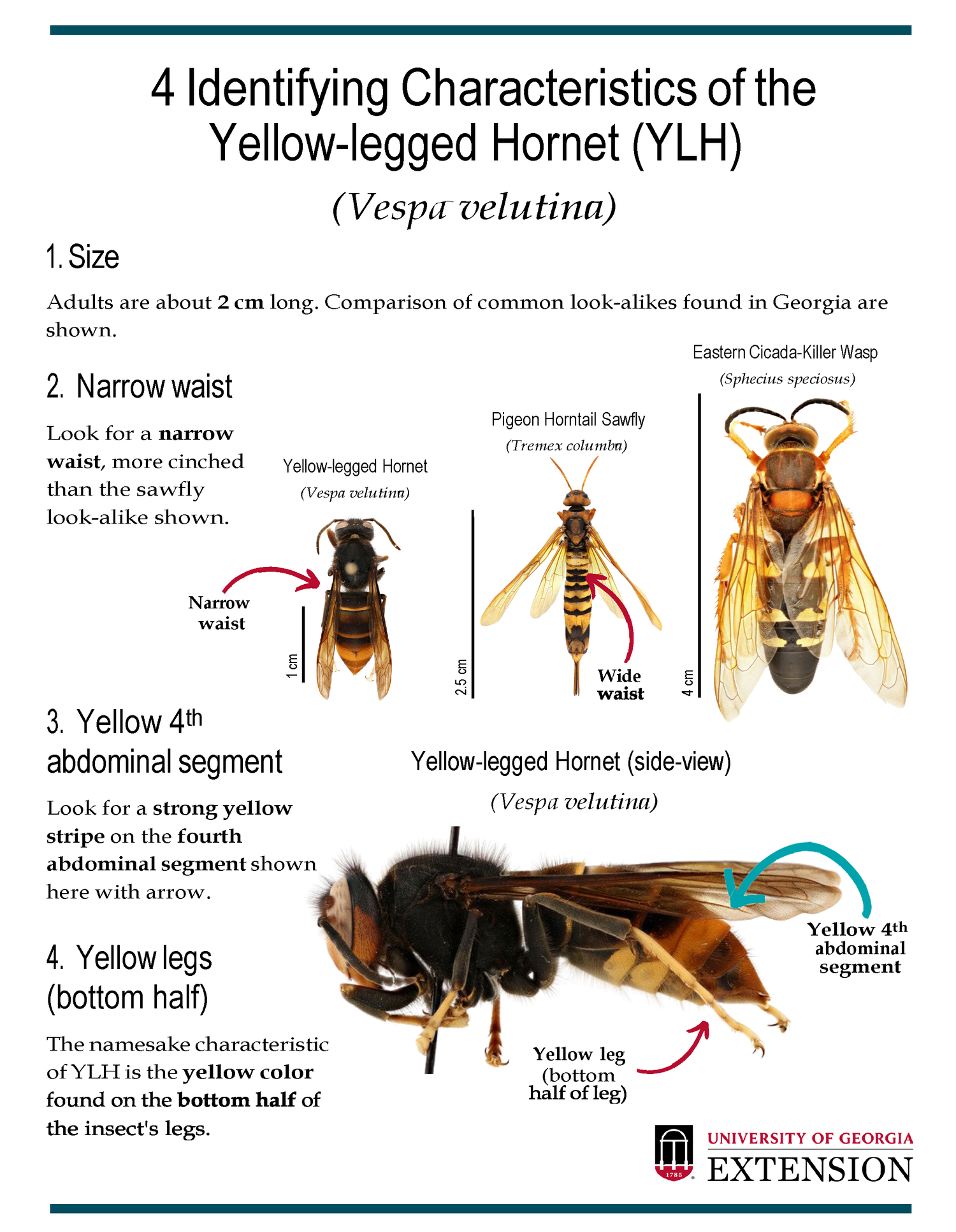
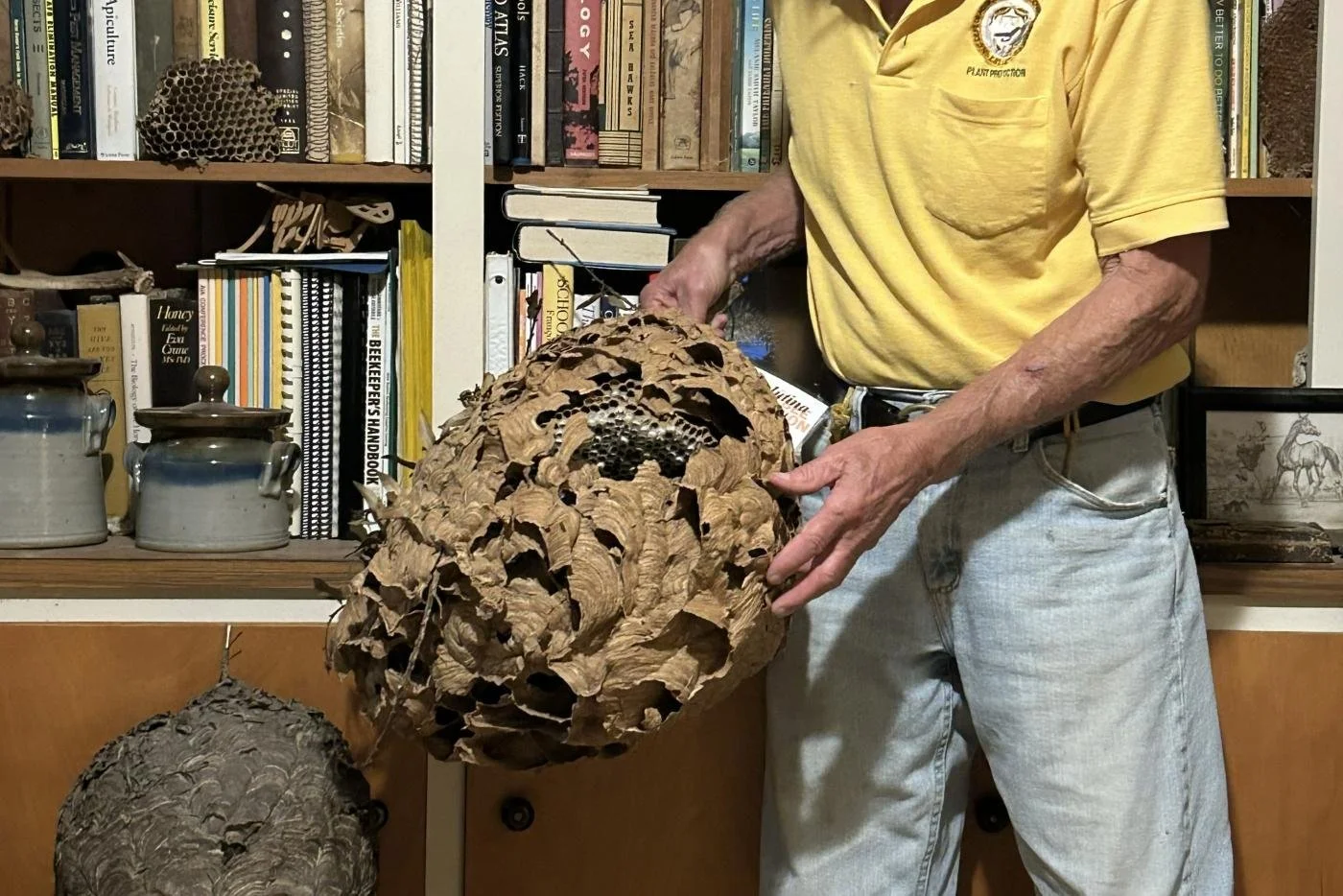
A yellow-legged hornet is dark — nearly black — with a velvety body, an orange-tinted face, and the bright yellow lower legs that give it its name. It runs a little under an inch long. Its nests are large and egg-shaped, often high in a tree, and appear reddish or muddy-colored.
European hornet
Bigger, brown and dull-yellow, and often flying at night around porch lights. No native hornet in North America does that — the easiest tell there is.
Bald-faced hornet
Black and white, and it builds the familiar gray, papery football-shaped nest. Gray nest, not muddy — that is your clue.
Cicada killer
A large solitary wasp that nests in the ground and is famously docile. It looks alarming and does almost nothing.
If you can safely photograph the insect or the nest, do that first. A clear photo settles the question faster than any description.
What does it mean for honey bees — and everyone else?
For a managed colony, sustained hawking is a stressor. Bees that should be out foraging instead cluster near the entrance, and the hive’s food stores and population can slip. For the wider landscape, the same predator that thins honey bee foragers also pressures the native bees and other pollinators your garden depends on. We have written before about our responsibility to native pollinators, and this is that responsibility showing up in a new form.
None of this is cause for alarm at the level of one confirmed site. It is cause for attention. There is a real difference.
What are we doing about it at our hives?
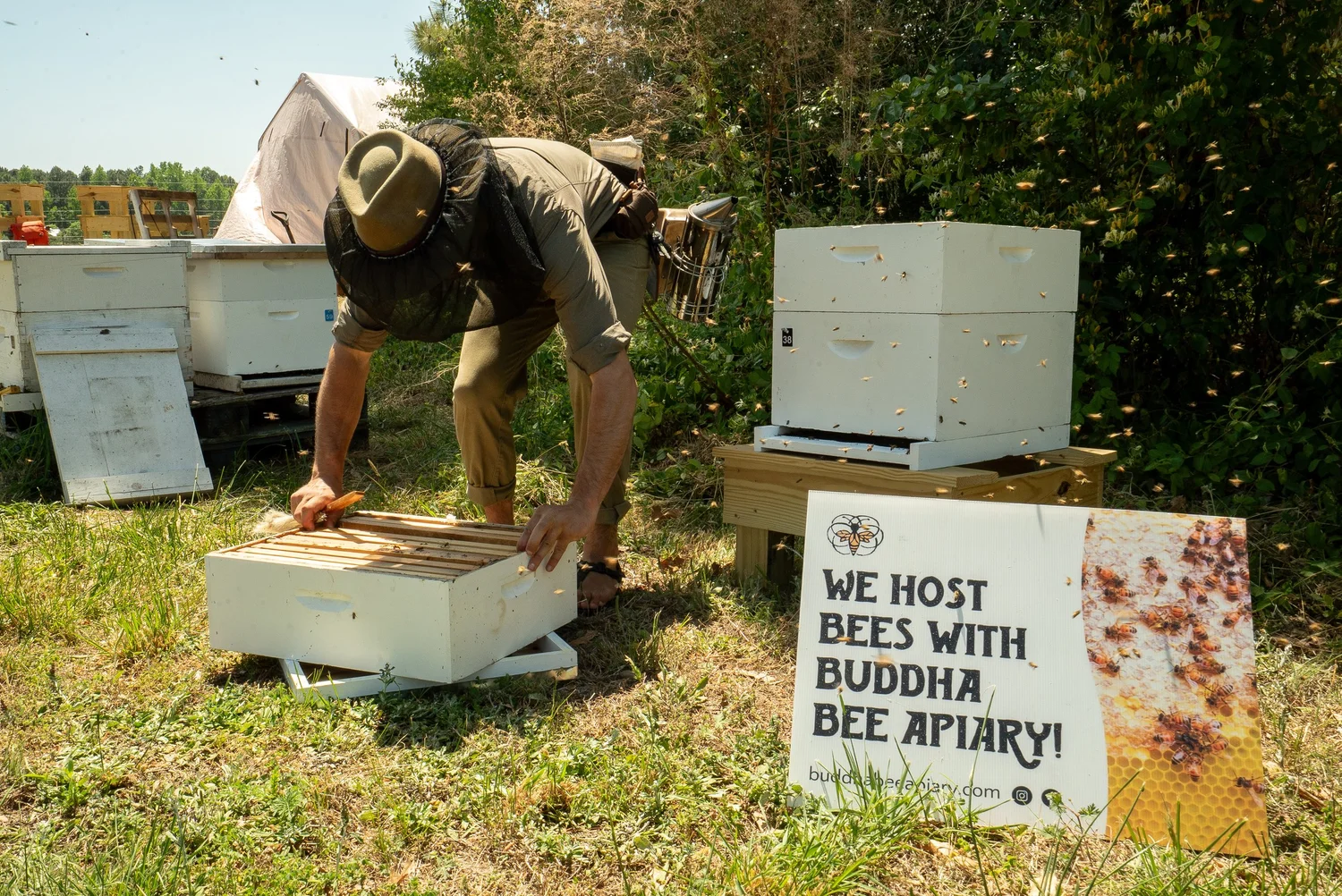
We manage colonies across Charlotte — from Ballantyne up through Myers Park — and across the Triangle, and we have added entrance-watching to our weekly inspections. Our beekeepers are looking for hornets loitering at hive mouths and for the hawking behavior that gives them away.
We are also digging into spring trapping. In parts of Europe that have lived with this hornet for years, trapping founding queens in early spring — before they can build out a nest — has shown promise for holding populations back. It is early, and we are learning, but it is the kind of measured tool that fits how we work.
When ABC11 covered the find, our lead beekeeper Keith Sabin walked through how to separate the hornet from its lookalikes, because a calm, accurate answer beats a viral photo every time. And a reminder from our swarm guide: a sudden cloud of insects in your yard is far more likely to be a honey bee swarm — gentle, temporary, and nothing to fear — than anything with a stinger looking for trouble.
Three steps, in order
From a distance. A clear photo settles the question faster than any description.
Do not knock it down yourself. Removal is the state’s job, and they want the location intact.
To NCDA&CS at ncagr.gov/YLH. Questions can go to Dr. Bill Foote, Plant Industry Division, (919) 707-3730.
If you keep bees, this is a good week to build and monitor a trap, and to keep an eye on hummingbird feeders — that is where the Matthews hornet first turned up. And if you have been thinking about what makes a yard genuinely good for pollinators in the first place, our guide on hive-friendly landscaping in NC is a good place to start. Healthy, well-sited colonies are more resilient to every kind of pressure, this one included.
One hornet at a hummingbird feeder, and a whole state started watching.